
The naturalist’s field journal lies open on the table, its margins thick with sketched anatomy — the jaw of something that speaks in harmonics, the triple-lidded eye of a plains nomad who sees heat the way humans see color. She has been travelling for eleven years, and she still cannot decide whether the Vel’khari are one people or seven.
The problem, she writes, is not observation. It is the category.
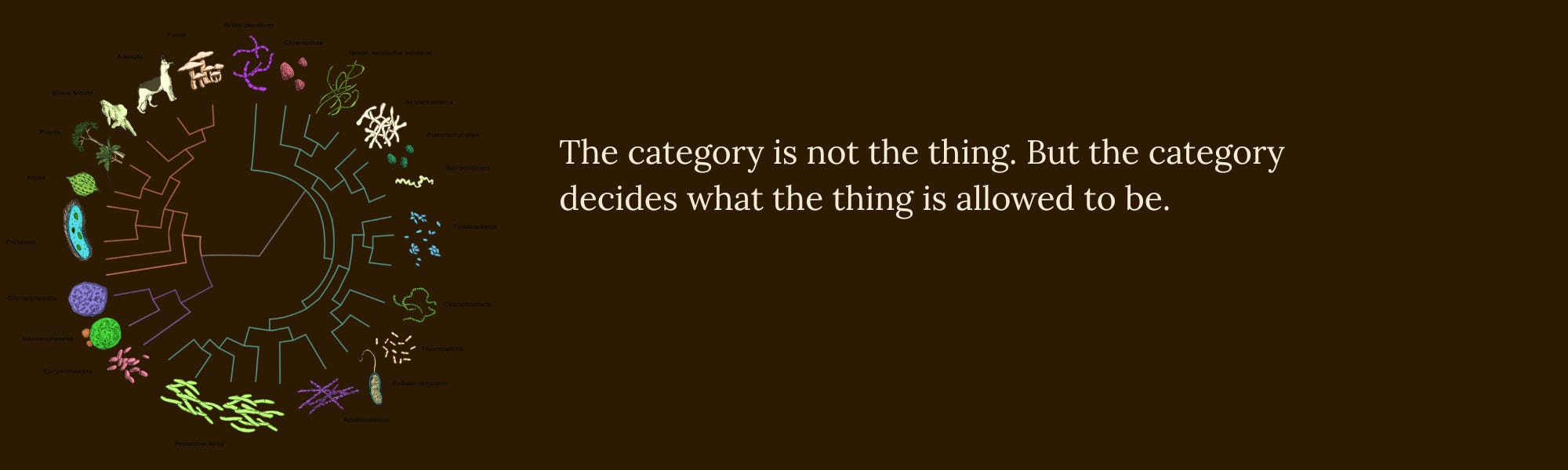
Classification is a technology. It is not a neutral act. When Carl Linnaeus sat down in the eighteenth century to impose order on the natural world, he was also making philosophical claims about what similarity means, what difference means, and most dangerously what relationship means. His taxonomy told a story about creation, about hierarchy, about who belonged where in the great chain of being. That story had consequences. It still does.
When you, as a world-builder, sit down to create the sapient species of your world, you are doing the same work. You are not merely designing a character ancestry option or filling out a bestiary page. You are laying the philosophical foundations of your world’s relationship with difference itself. The question is not only what your species look like or what powers they have. The question is: what is the structure of the knowledge your world uses to understand them?
This issue is a field guide to that structure. We will look at how real-world taxonomy, anthropology, and the history of natural philosophy can inform richer, more internally consistent frameworks for sapient life and how those frameworks ripple outward into everything from law and trade to romance and war.
